

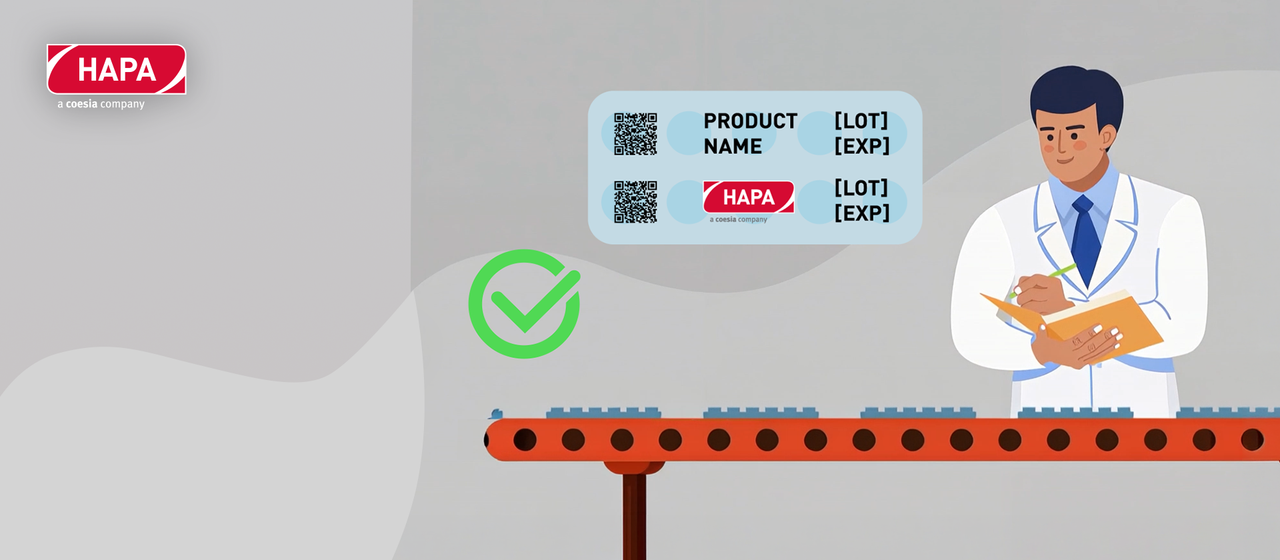
How digital integration revolutionized a pharma giant's supply chain while reducing its carbon footprint
When pharmaceutical manufacturers talk about innovation, conversations typically center around drug development, clinical trials, and therapeutic breakthroughs. Yet behind every life-saving medication lies an equally critical element that rarely makes headlines: the packaging process.
Pharmaceutical packaging plays a key role in patient safety and product integrity. It shields medicines from environmental exposure, communicates essential information, and ensures traceability across the supply chain—so that every patient gets exactly what they need, when they need it.
For one leading global pharmaceutical company, revolutionizing this often-overlooked aspect of production has unlocked extraordinary efficiency gains while dramatically reducing their environmental footprint.
The challenge of rising SKU complexity
The company's packaging operations faced a growing challenge that affects nearly every manufacturer today: the increasing number of Stock Keeping Units (SKUs). As products become more tailored to individual markets, SKU complexity rises—driven by variations in formats, dosages, languages, and product types.
Managing such diversity requires packaging processes that are highly agile and tightly integrated with enterprise systems. Every additional SKU can bring new artwork, data, and compliance requirements, putting pressure on production workflows.
To illustrate this, consider the following example calculation—not from the customer, but representative of the challenge many manufacturers face: Example calculation:
Format x
| Dosages x | Language x | Products = | Stock Keeping units
|
3 | 4 | 25 | 10 | 3000 |
While Hapa's flexographic printing has reliably supported the pharmaceutical industry for decades—and continues to do so today for many production scenarios—this customer’s setup presented a particular challenge. With a high number of production lines and the need to print variable data directly onto blisters, their implementation involved several additional steps, from artwork creation to plate preparation and print mat handling. Flexo remains an optimal solution for certain use cases, especially high-volume runs with minimal variable data, but for this manufacturer, growing SKU complexity highlighted the need for a more agile alternative.
The customer had already made a significant leap forward by moving from pre-printed foil to inline printing, which allowed for greater flexibility and reduced inventory of preprinted stock. However, flexo printing still posed challenges in this high-complexity environment—particularly with frequent changeovers and the increasing need for serialized and variable data.
Transitioning to digital Drop-on-Demand (DOD) printing provided an even greater boost. DOD technology enables on-the-fly data updates and seamless artwork adjustments. This capability becomes increasingly important in a regulatory landscape where requirements like data matrix codes or full serialization are becoming the norm.
The company recognized that to meet future demands and stay agile in a fast-changing market, their packaging operations needed a smarter, more integrated solution—without compromising their proven quality standards.
From printers to supply chain automation – Hapa as your strategic partner
What began as a discussion about printing technology evolved into a significant workflow improvement project rooted in a consultative approach. By listening closely to customer needs and challenges, Hapa was able to co-develop new technologies that enabled fully integrated and automated workflows. The company's leadership recognized that enhancing their packaging operations presented an opportunity for strategic improvement. The decision to work with Hapa was a natural one, built on a long-standing relationship between the two companies. The project initially focused on improving a single packaging line, but quickly evolved into a site-wide collaboration centered around supply chain automation.
Through this process, Hapa helped connect the dots across various business systems at the customer site, extending beyond print technology and deepening the collaboration.
This was made possible by a highly collaborative approach. On both sides, dedicated experts worked together—customer teams with deep process knowledge and Hapa specialists who could explain and optimize specific sub-processes. This close collaboration enabled the development of a tailored, forward-looking solution that fit the customer’s needs.
From isolated processes to integrated transformation
Hapa’s digital solutions have been designed with future scalability in mind. By successfully interfacing with the customer’s digital enterprise systems (ERP, MES), the implementation at this site has now become the de facto standard for the customer and is being rolled out across other global sites. This marks a significant step forward, establishing a best-practice template for integration and automation that extends well beyond a single line or location.
The digital solution transformed the workflow significantly. Artwork templates are now created only once with placeholders for variable data. When production begins, the system automatically pulls all necessary data—such as batch numbers, expiration dates, and serialization codes—directly from SAP, enabling production to start at the push of a button.
This integration has compressed processes that previously took hours into minutes, while reducing the potential for human error. The original artwork never gets touched in the new process, and variable data is automatically populated from the enterprise system, ensuring accuracy while eliminating manual data entry.
Hapa has empowered the customer to sustainably digitalize even the most complex packaging workflows, establishing long-term scalability and operational excellence.
Quantifiable benefits across multiple dimensions
The enhancement has delivered measurable improvements across several performance metrics for the digitally equipped line.
One key benefit has been the elimination of errors and delays associated with obsolete or faulty print mats—an issue that previously impacted production efficiency. In this example, the customer no longer needs to store or prepare print mats for the updated line, removing time-consuming setup tasks. These improvements are expected to scale even further as additional lines are upgraded.
Production changeovers are now much faster thanks to a streamlined and automated setup. Quality remains excellent, with digital printing offering consistent results comparable to their flexographic systems. Environmental considerations have been addressed through the substantial reduction of materials required in the printing process.
Most importantly, the company has gained a new level of responsiveness on their digital line. Packaging changes can be implemented faster and with fewer manual steps. While full serialization capabilities are still in development, the system has been designed with these future requirements in mind, and Hapa is working closely with the customer to enable upcoming regulatory needs.
Scaling the digital transformation
Building on the success of the initial implementation, the customer has now made this solution the foundation for a broader digital transformation across multiple sites. The first installation has set a strong precedent—so well received that it’s now driving a global rollout. By integrating the Hapa system into their SAP workflow, the customer has created a scalable model that simplifies future transitions and supports a consistent digital approach across their operations. This marks a major step forward in redefining packaging workflows and demonstrates the far-reaching impact of this initial success.
Taking the next step toward supply chain automation
This enhancement represents a thoughtful approach to pharmaceutical packaging operations—recognizing the strengths of existing technologies while strategically implementing digital solutions where they provide distinct advantages. To unlock the full potential of a seamless digital workflow, it's essential to harness the capabilities of inline digital printing solutions. This shift enables manufacturers to achieve new levels of operational flexibility while future-proofing their operations against evolving regulatory requirements.
For pharmaceutical companies evaluating their packaging strategies, this case demonstrates how digital workflows can enhance existing processes to improve agility, efficiency, and sustainability. As regulatory requirements continue to evolve and market demands for agility increase, pharmaceutical manufacturers must evaluate whether their packaging operations are positioned for future success.
To learn how your organization can benefit from similar digital integration strategies, contact us for a comprehensive operational assessment. Our experts will work closely with you to identify optimization opportunities and craft a tailored digital transformation strategy aligned with your business goals.