
Let Us Guide You Through Pharmaceutical Printing
> > >
Discover why Hapa is a leader in pharmaceutical printing
Contact usPharmaceutical printing combines precision, material compatibility, and process control to ensure safe and reliable packaging. By understanding its core principles, manufacturers can better see how printing supports flexibility, reduces risk, and simplifies complex packaging workflows.
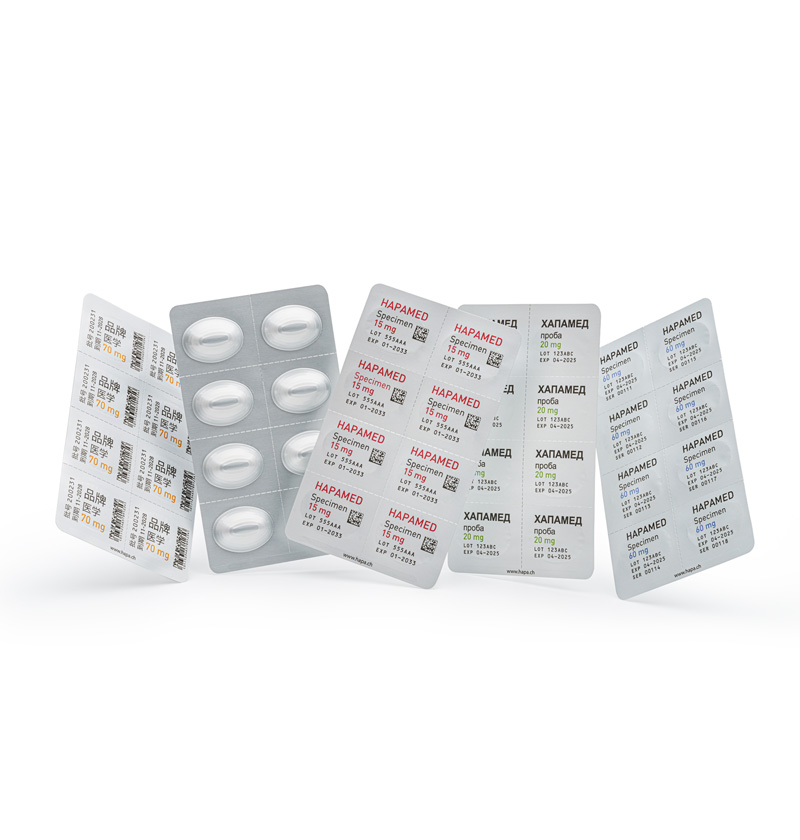
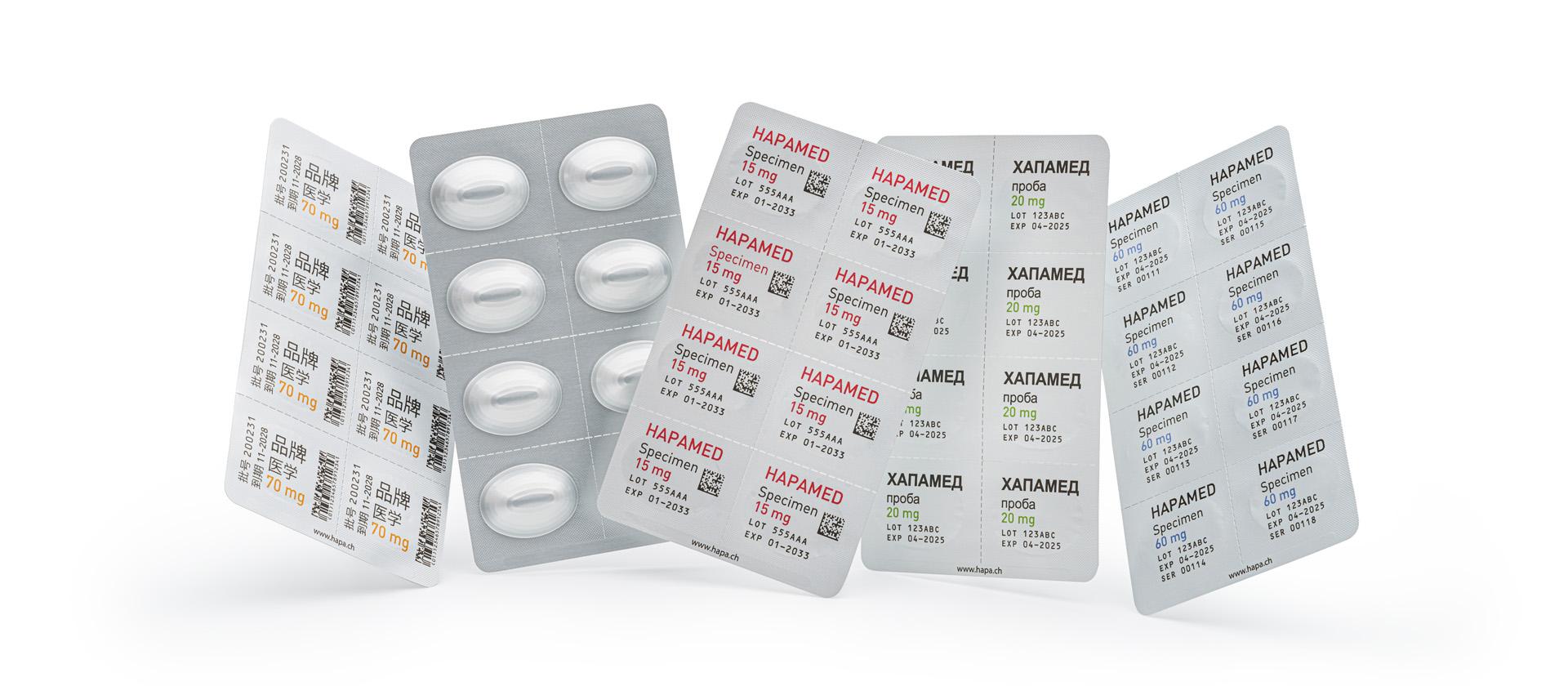
Pharmaceutical printing is the precise application of batch data, expiry dates, product identifiers, and market-specific information onto primary packaging materials used across the pharma and veterinary markets. These materials must meet strict requirements for print quality, adhesion, and durability to ensure patient and product safety across the entire lifecycle.
Traditionally, many of these elements were pre-printed by external suppliers. Today, more and more pharma companies are shifting printing operations closer to – or directly onto – the packaging line. This supports faster artwork changes, reduces the risk of obsolete stock, and keeps control of critical print steps within the production environment.
Growing SKU diversity, varied markets, and smaller batch sizes increase complexity in packaging. Inline pharmaceutical printing supports flexibility by allowing manufacturers to:
By integrating printing into the packaging workflow, companies can simplify processes and respond more effectively to changing market needs.
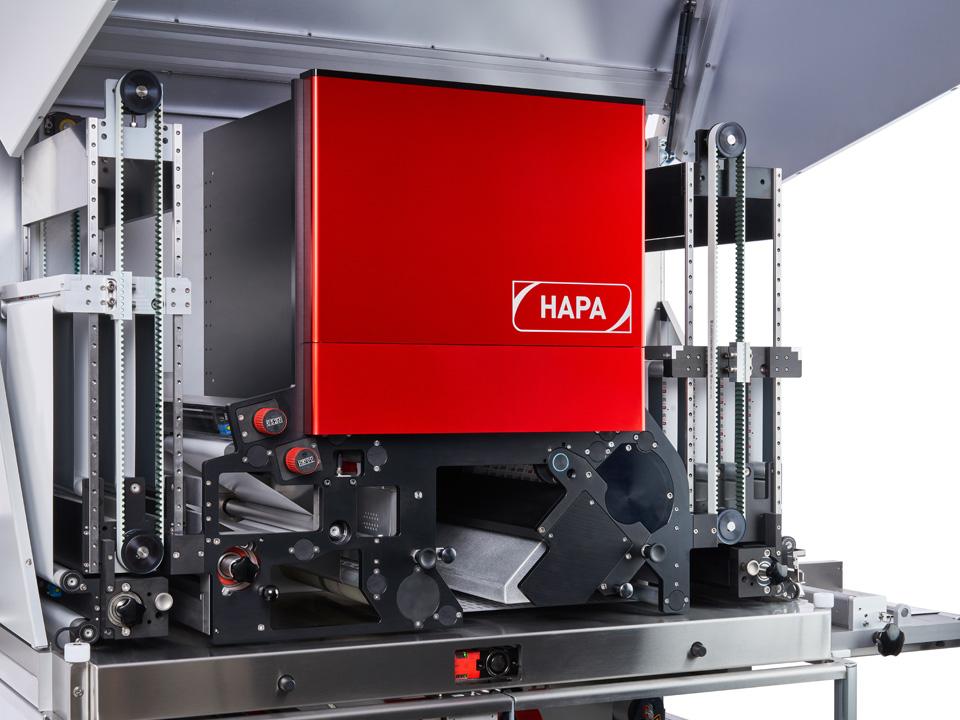
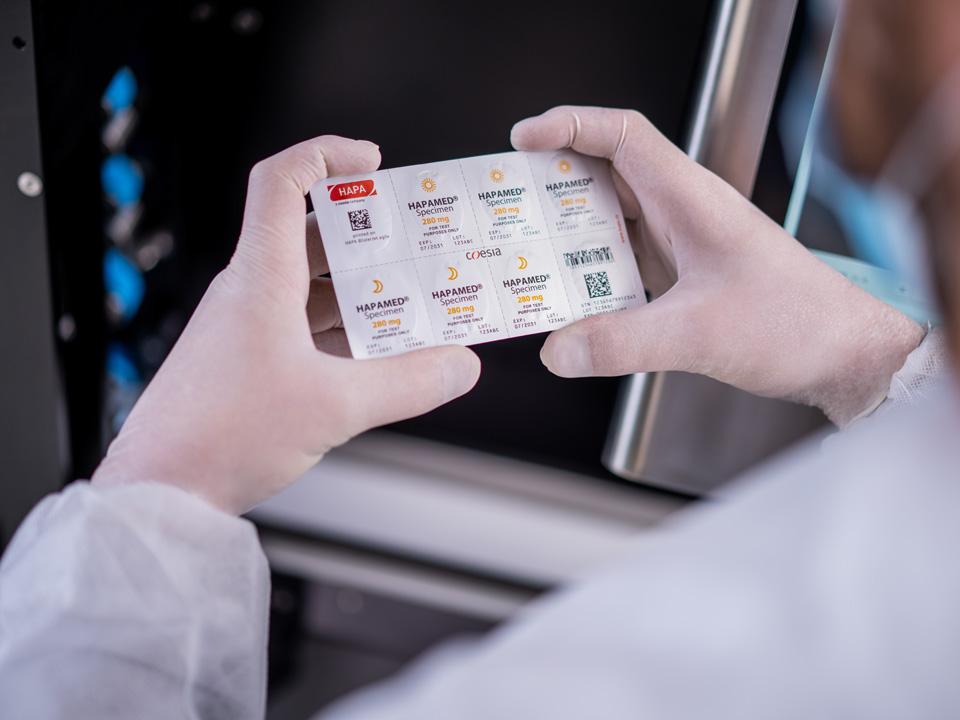
As a specialist in pharmaceutical printing, Hapa supports controlled and adaptable processes designed for regulated production environments. The key trends shaping this landscape include:
- growing product and market complexity
- more frequent line interventions and clearance efforts
- tighter control of packaging inventory and waste
- new demands driven by sustainable materials
- higher expectations for print accuracy and traceability
Pharmaceutical companies face rising numbers of product variants, markets, and languages. At the same time, batch sizes are decreasing. This drives higher complexity in planning and artwork management and puts pressure on packaging lines to accommodate more frequent product and artwork changes.
With shorter production runs, lines must be stopped and cleared more often. In regulated environments, each changeover requires strict procedures and documentation. These steps consume time, affect equipment efficiency, and make stable production planning more difficult.
Managing many variants of pre-printed materials ties up warehouse capacity and increases the risk of obsolete stock when artworks or regulations change. Storing multiple foil or label types adds administrative effort and limits production flexibility.
The shift toward more sustainable substrates such as PP, PE, or PET introduces new technical requirements. Ensuring stable print adhesion and readability on these materials can be challenging, and packaging teams must adapt their processes accordingly.
Pharmaceutical packaging must display batch data, expiry dates, and safety information with consistent quality. Requirements for traceability and readability continue to increase, placing additional demands on printing accuracy and process control.
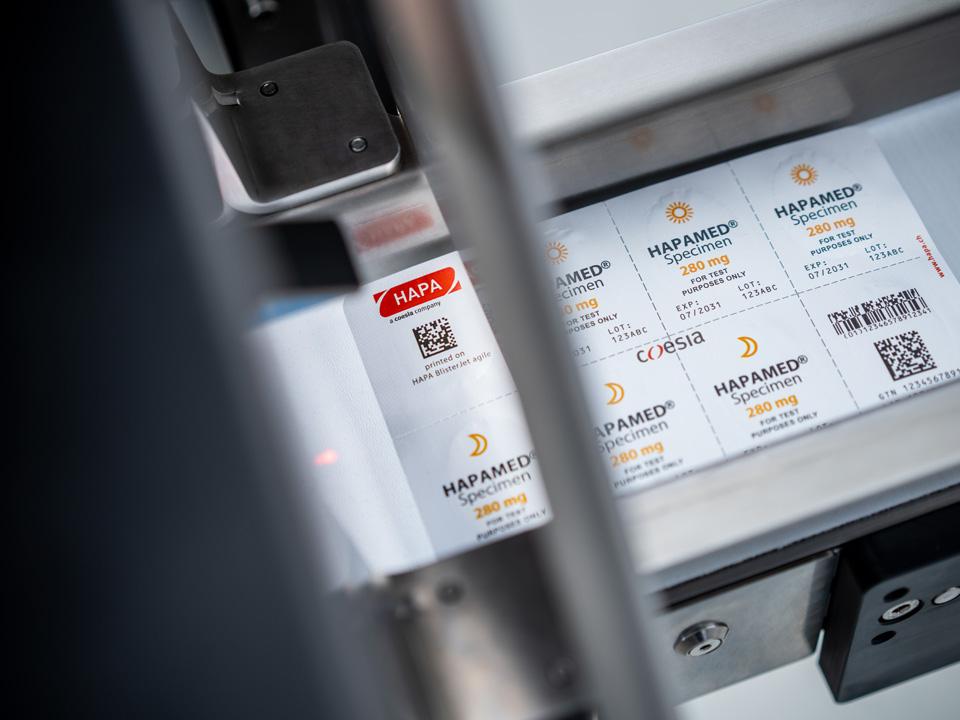
Late-stage customization allows blister lines to run independently from artwork or market requirements. Blisters are produced, sealed, filled as blank units and stored without printed information. Once demand becomes clear, the exact quantity of blisters is retrieved from stock and printed with final product or batch data.
Hapa provides printing technologies developed for pharmaceutical packaging processes. These systems support both inline on-demand printing and late-stage customization and are designed to deliver stable, high-quality results in regulated environments. Long-standing cooperation with industry partners has helped us build a deep understanding of complex customer needs and supports printing solutions that fit regulated production environments.
Digital printing supports fast changeovers and flexible production. It can print full artworks as well as variable or market-specific data, making it suitable for operations with many SKUs or frequent artwork changes. Digital printing also integrates well with automated workflows. Hapa’s solutions for print data preparation and camera inspection reduce manual setup effort and support consistent results across products and markets.
Flexographic printing offers reliable quality for longer production runs. Flexo systems can be integrated inline or nearline and provide stable, repeatable results for pharmaceutical packaging materials.
Hybrid printing combines flexo and digital technologies. Static elements are printed with flexo, while variable or market-specific details are added digitally. This approach supports both efficiency and flexibility within the same process.
Laser engraving is used to produce rubber print mats for Hapa flexo systems. In-house engraving helps simplify artwork adjustments and supports flexibility in flexo workflows.
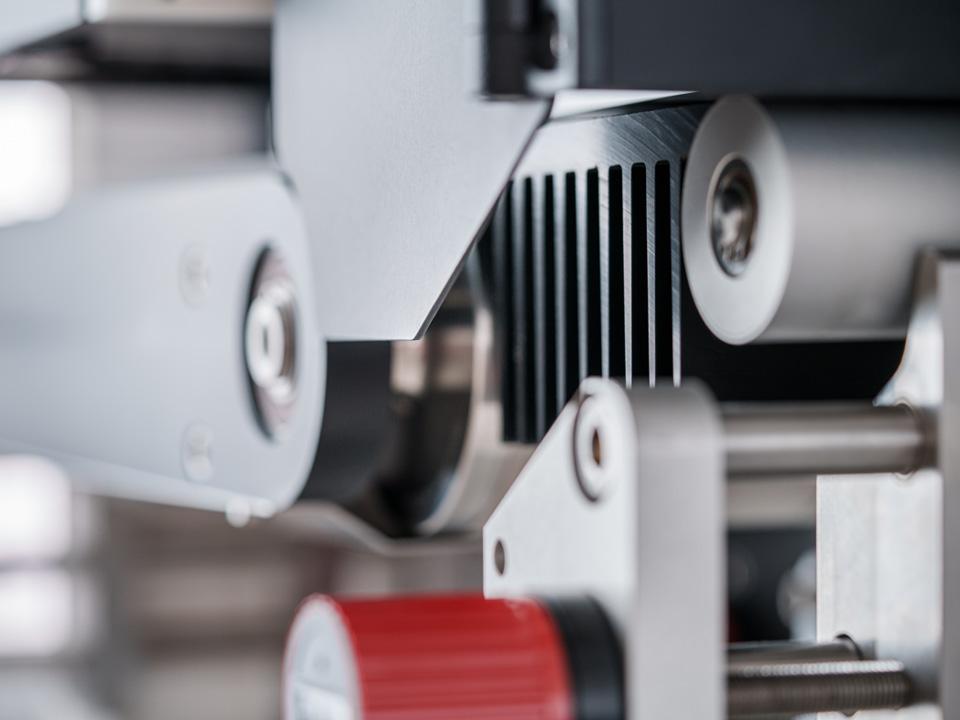

Pharmaceutical printing supports safe, efficient, and flexible packaging operations. Rising SKU complexity, smaller batch sizes, and new material requirements increase the need for adaptable printing processes. Inline on-demand printing and late-stage customization help manufacturers reduce complexity, minimize waste, and react quickly to market demands. Combined with digital, flexo, hybrid, and laser technologies, these approaches provide stable and scalable solutions for regulated environments.
Hapa’s long-standing experience in pharmaceutical packaging printing supports manufacturers in building reliable workflows that meet current requirements and remain adaptable for future needs.